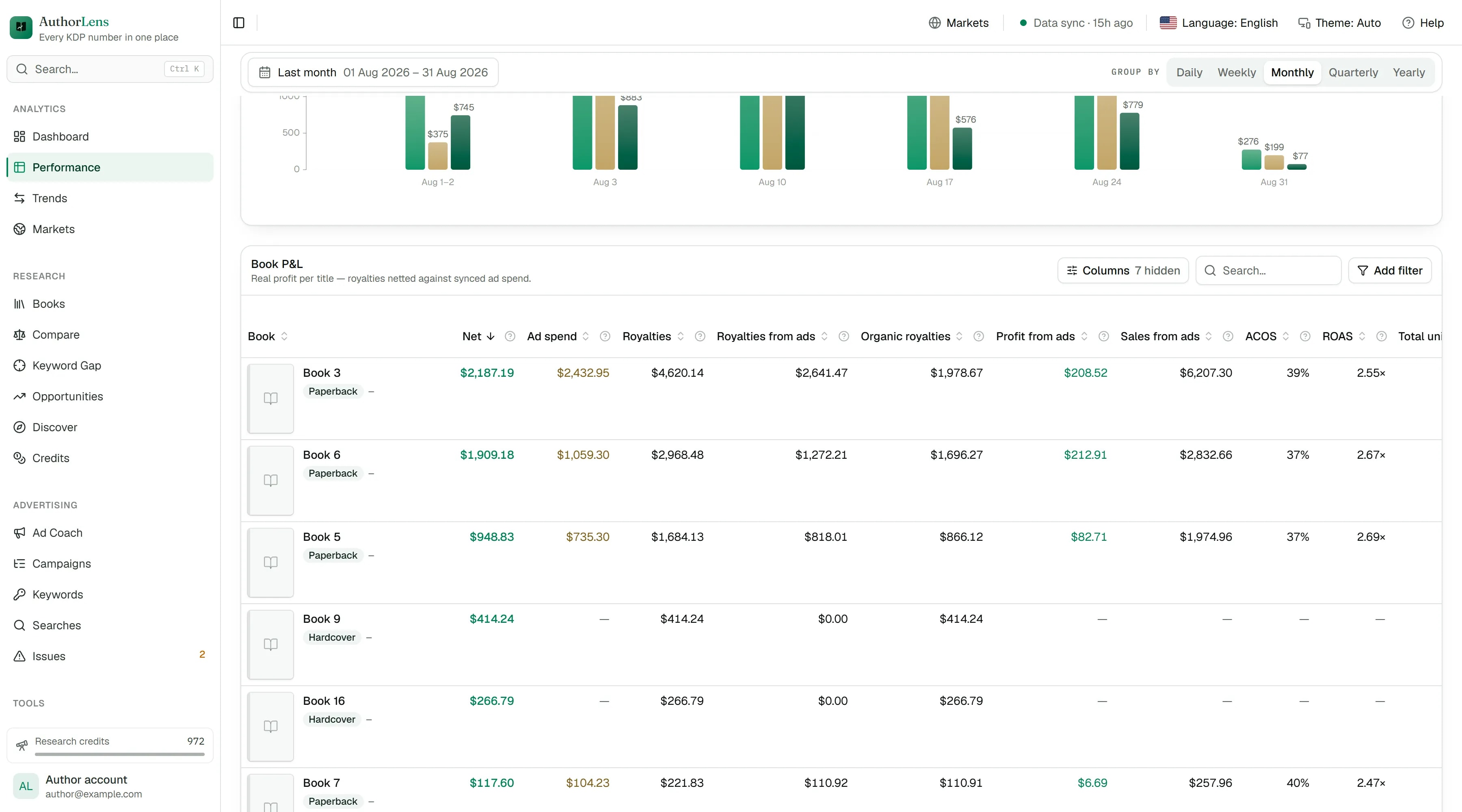
Net royalties per book
Royalties minus ad spend. The one number the whole business comes down to — and it is worked out book by book, not across the account as a whole.
AuthorLens — every KDP number in one place
One analytics platform for Amazon KDP: ad and organic orders, campaigns, keywords, search terms, competitors, ratings, reviews and clear optimisation advice.
Your whole publishing business, on one screen.
Set-up takes a few minutes · Amazon Advertising data comes in directly · royalties through the browser extension · cancel anytime
See what is working. Find what is wasting money. Know what to do next.
An example month from a made-up author’s catalogue — the real screens are below.
Inside AuthorLens
Every marketplace netted into one profit number. Every campaign measured against the break-even you actually earn. Every keyword shown with what it wasted. These are the real screens, on a real account.
Drag the screenshot sideways to see all of it →
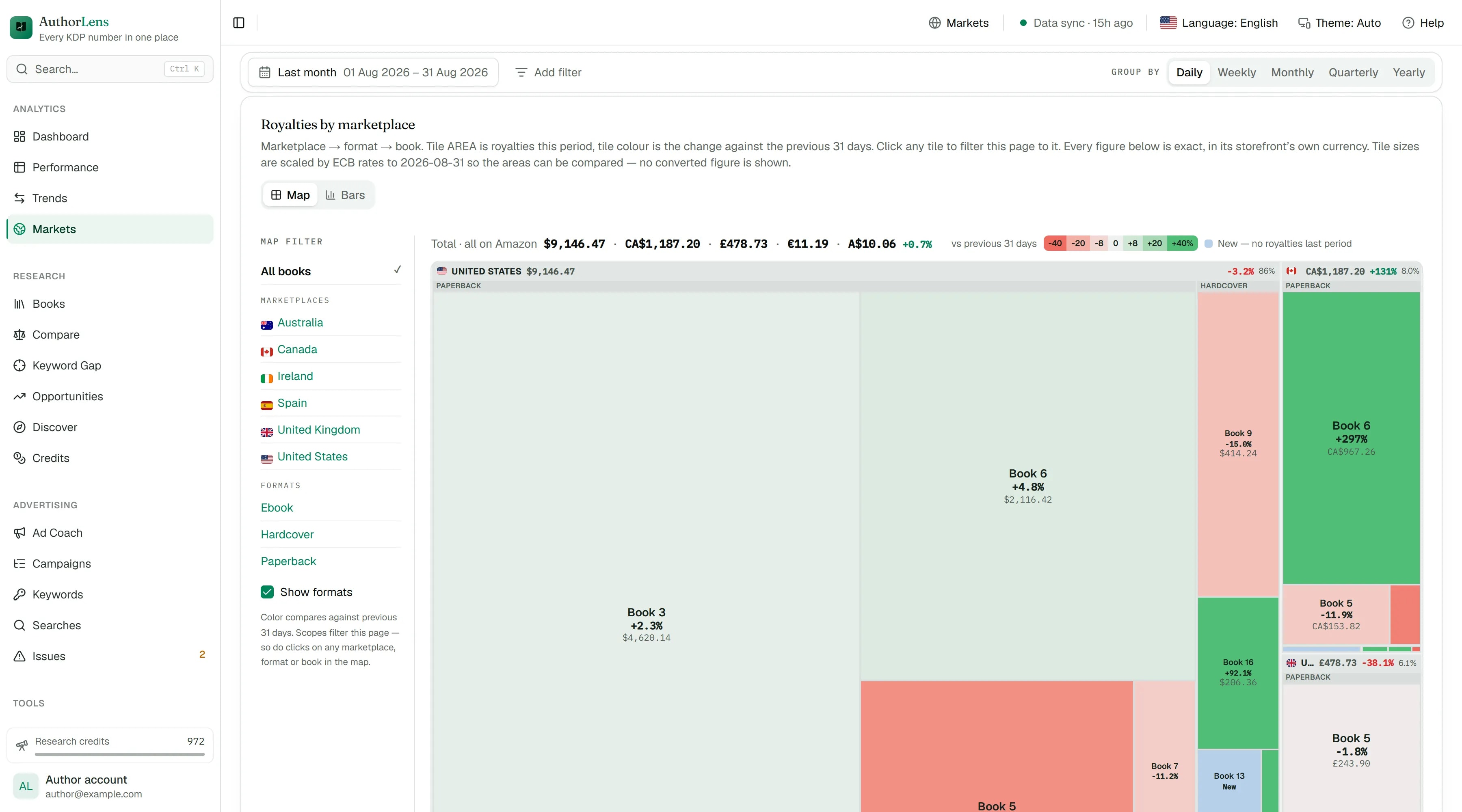
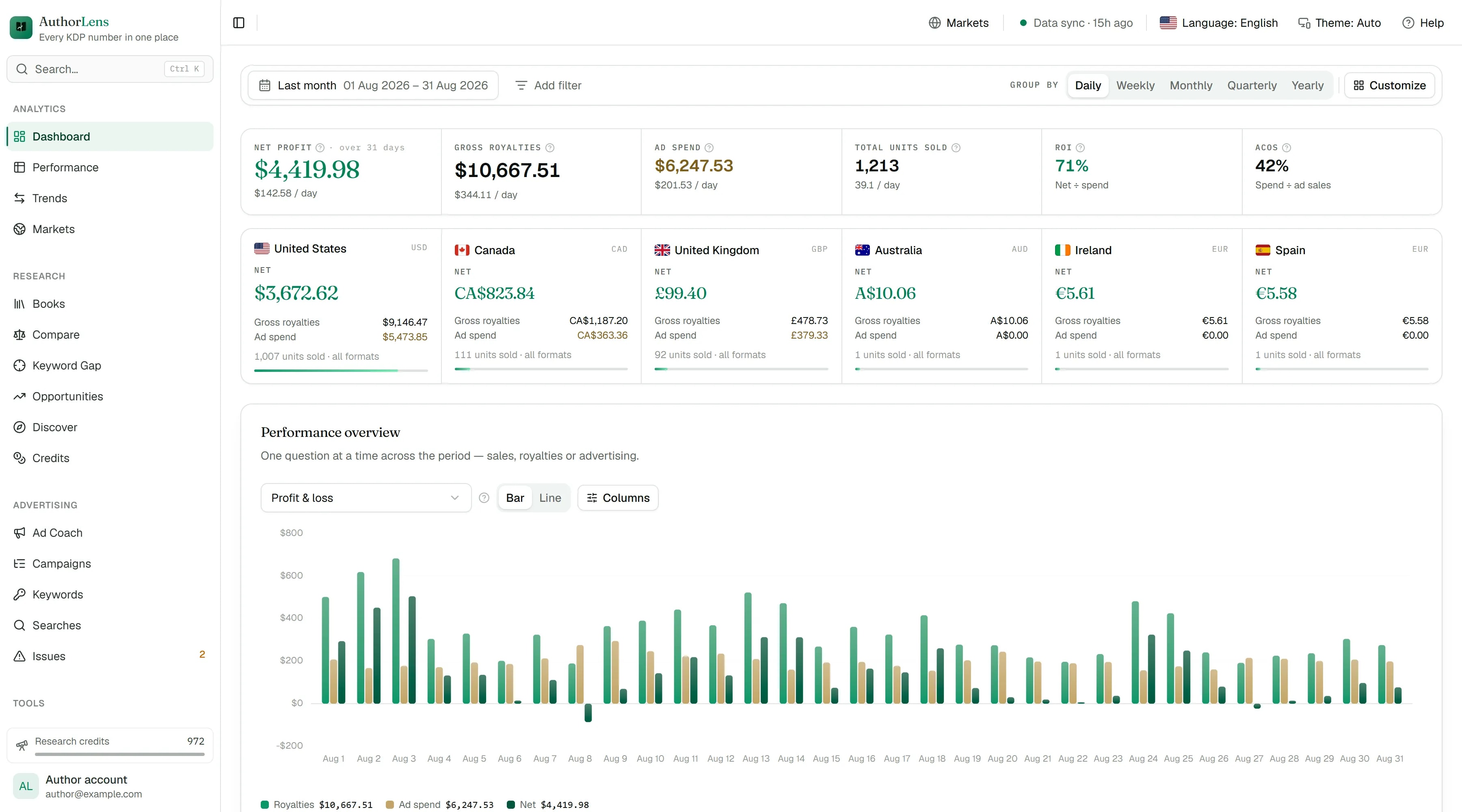
Net profit for the whole catalogue, split by marketplace and shown in each storefront’s own currency. United States alone: $137,677.92 in royalties, $24,316.77 of ad spend, $113,361.15 kept — with the UK, Canada and Germany each counted in their own currency beside it.
A real AuthorLens account, captured 10 September 2026 — August 2026 end to end. Every figure is genuine; the titles, authors, covers, keywords and search terms are replaced with placeholders so the publisher's catalogue stays private.
What it replaces
Both do one part of the job well: they show you what readers are searching for. But the second question — how much this particular book kept after advertising — neither answers, before launch or a year later.
It does not count your sales at all — neither paid nor organic. Royalties, spend and what the book kept after launch stay outside it.
It does not read KDP royalties or KENP reads — and without those there is no net profit per book, no organic sales, and no answer on which campaigns to fix.
Keywords, niches and competitors — everything they give you. Plus what neither of them has:
It does not work with physical products: this is a tool for books on Amazon KDP only.
Comparison based on publicly available information as of August 2026. Publisher Rocket and Helium 10 are trademarks of their respective owners; AuthorLens is not affiliated with either.
Inside
Royalties minus ad spend. The one number the whole business comes down to — and it is worked out book by book, not across the account as a whole.
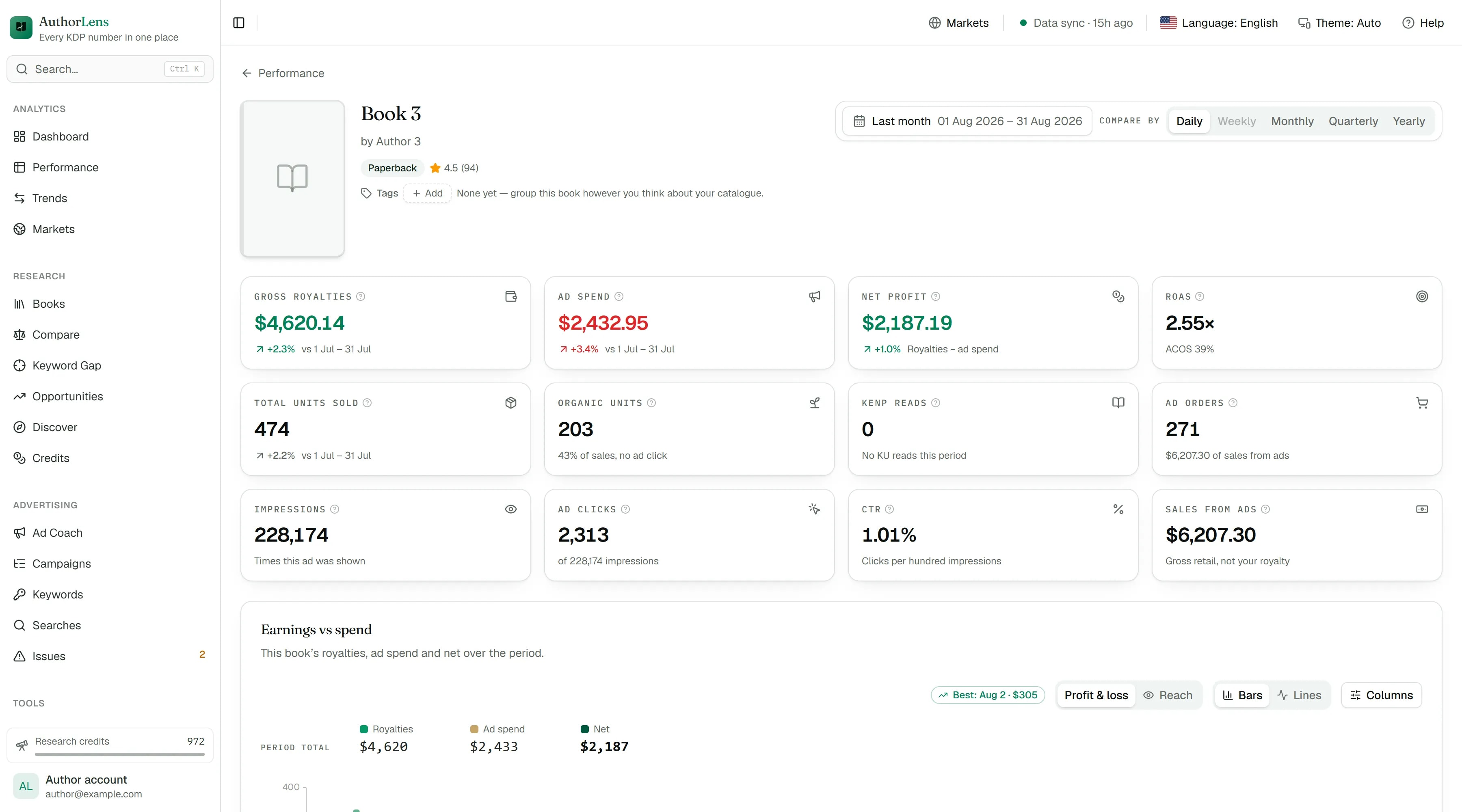
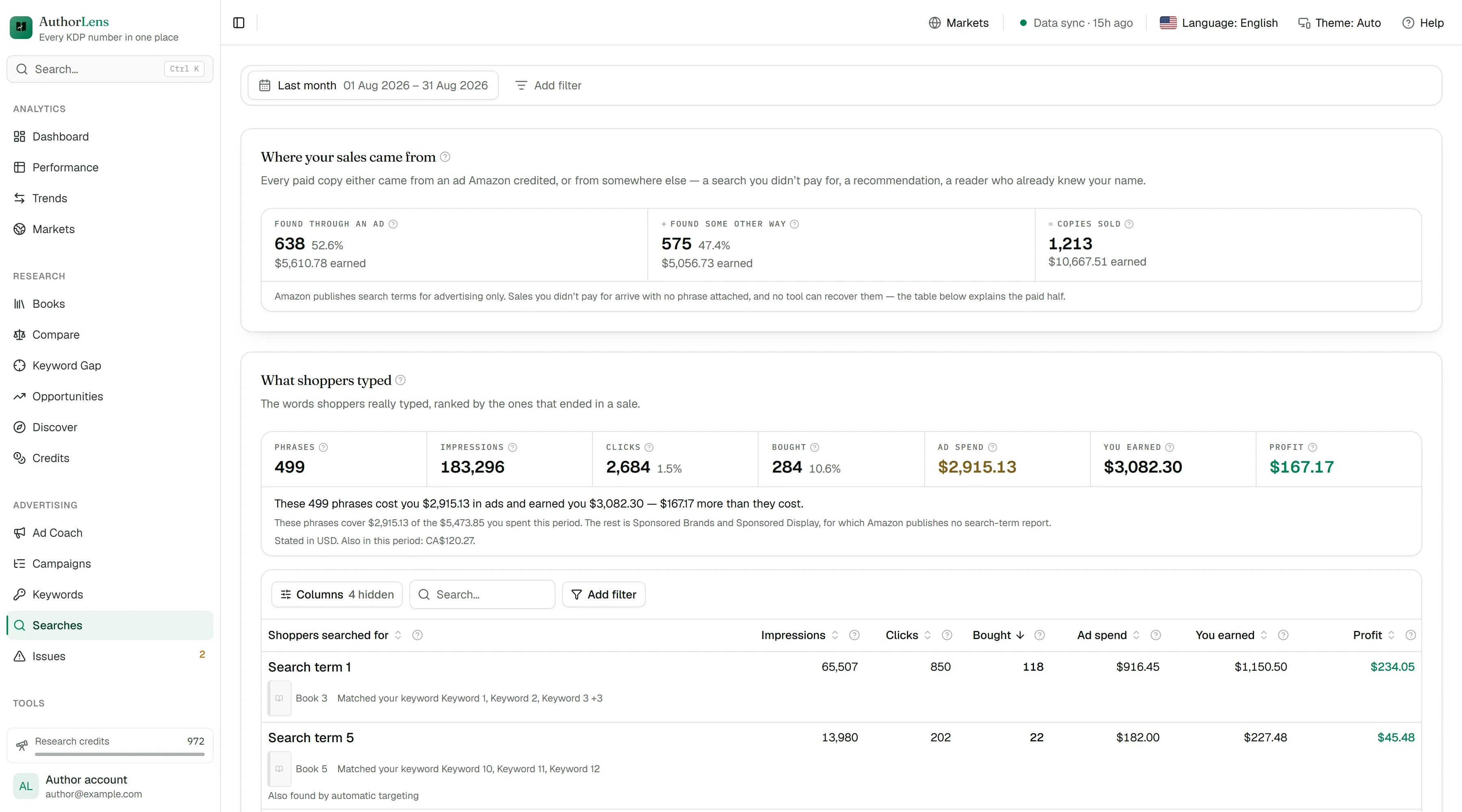
See how many sales advertising brought and how many arrived on their own. You did not pay for the second kind — and they are exactly why ACOS always looks worse than the business actually is.
Not per account and not per campaign, but for one specific title: which to put more into and which to stop.
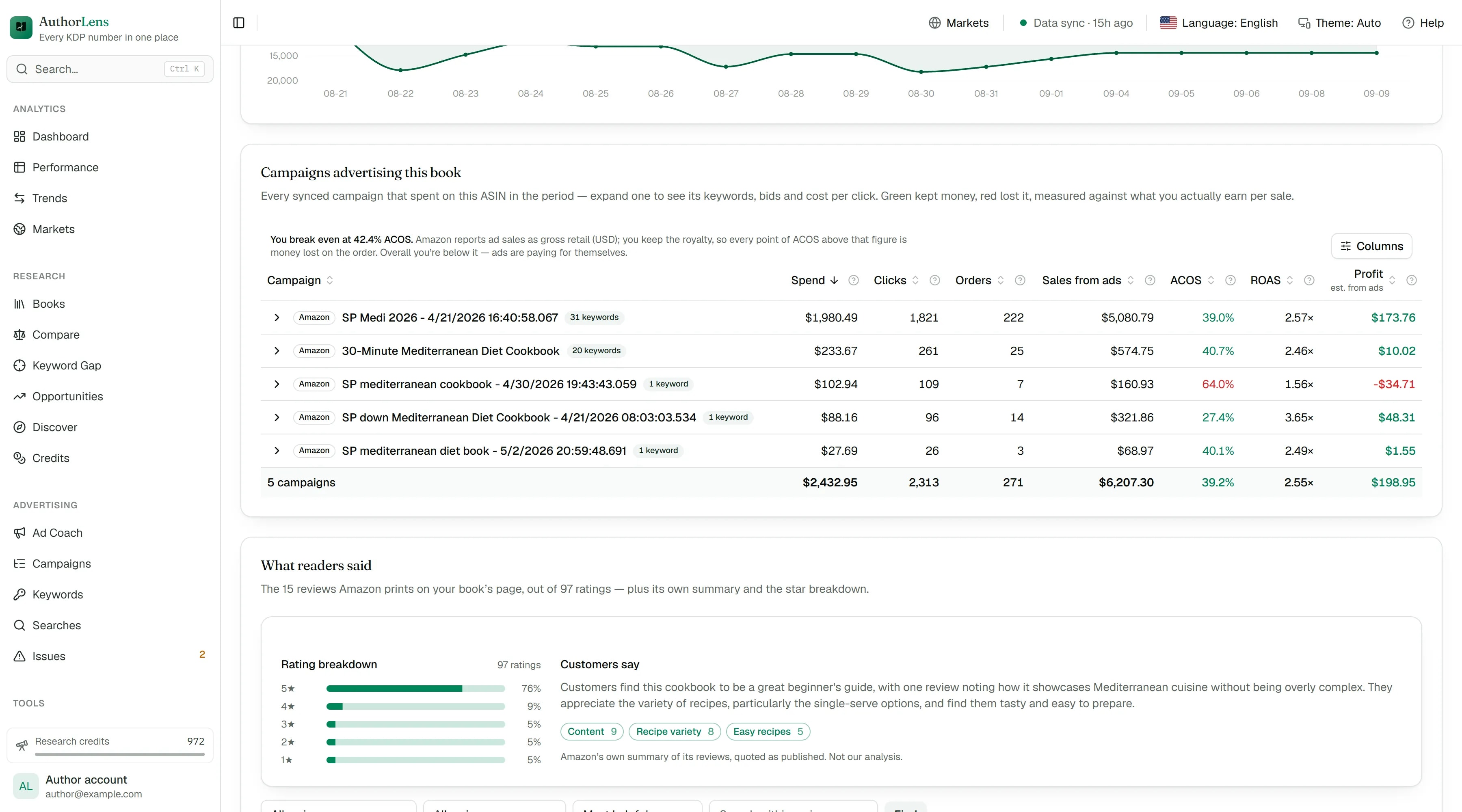
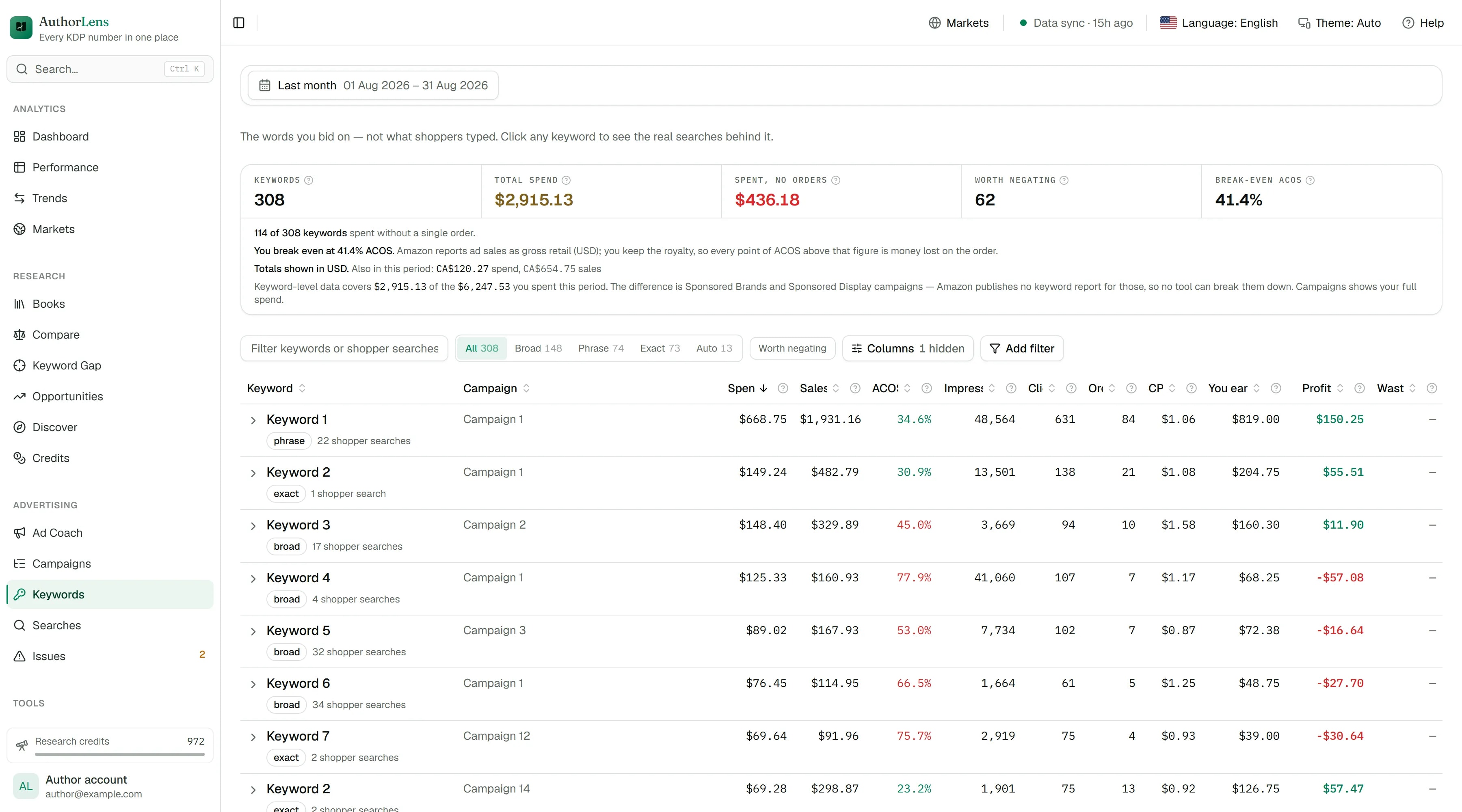
Which ones bring orders and which only spend the budget. Clicks, spend, orders and conversion for every term separately, not averaged across the campaign.
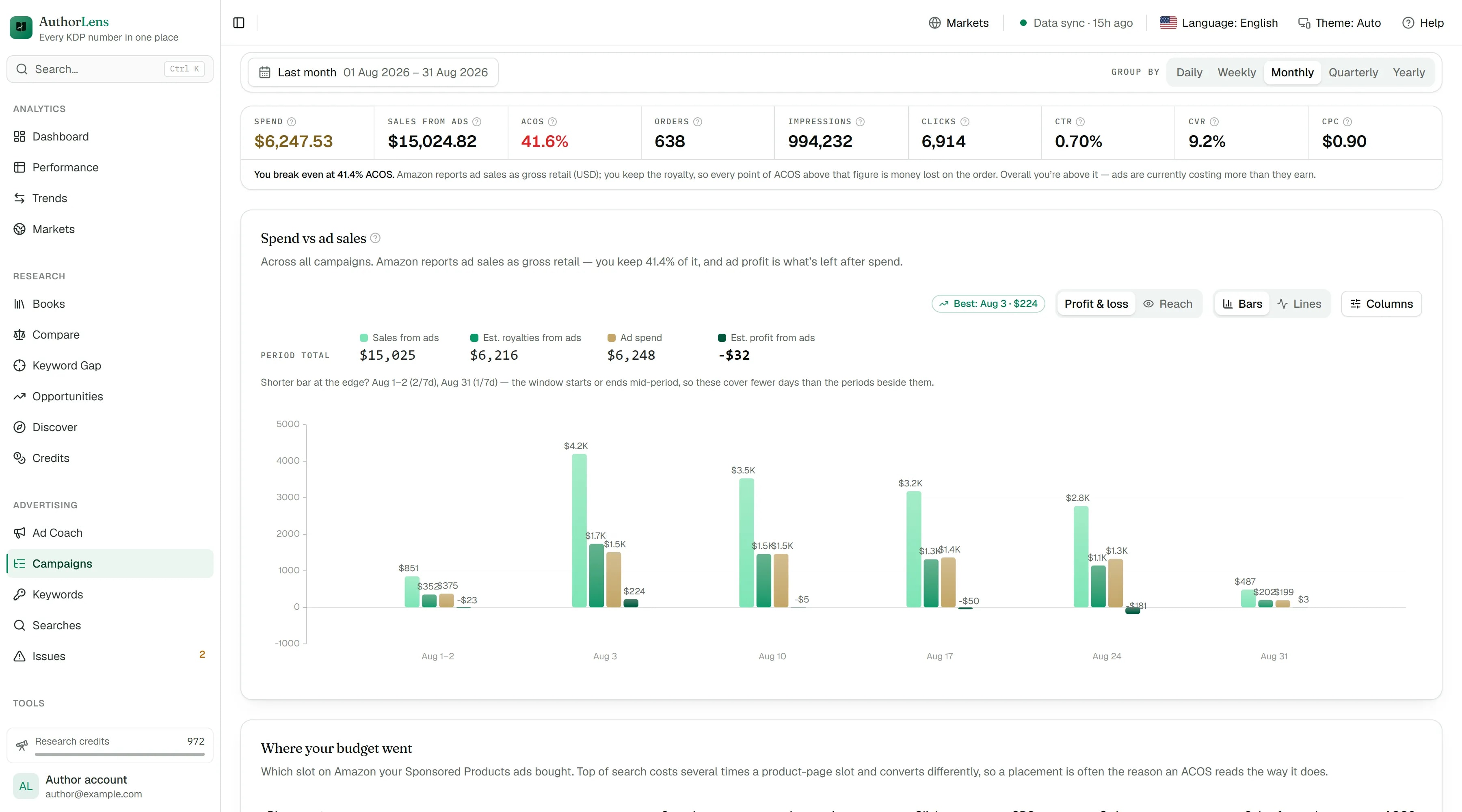
Everything the ad console holds, in one table: impressions, clicks, CTR, CPC, bids, orders, spend, conversion and ACOS — by campaign, ad group and target. You can see what is dragging you down and what deserves more budget.
A video or brand campaign can feature several books at once, so Amazon never says which one earned the sale. That spend gets its own line instead of being guessed onto a title — it still counts in your totals, and you can see exactly how much it is.
Any chart and any table can be configured: pick the metrics you care about, drop the columns you don’t, change the period and the breakdown. This applies across the whole product, not to one screen — and your choices are saved.
How many copies each format sold and how much each one brought. No opening three reports to work out what is actually holding the book up.
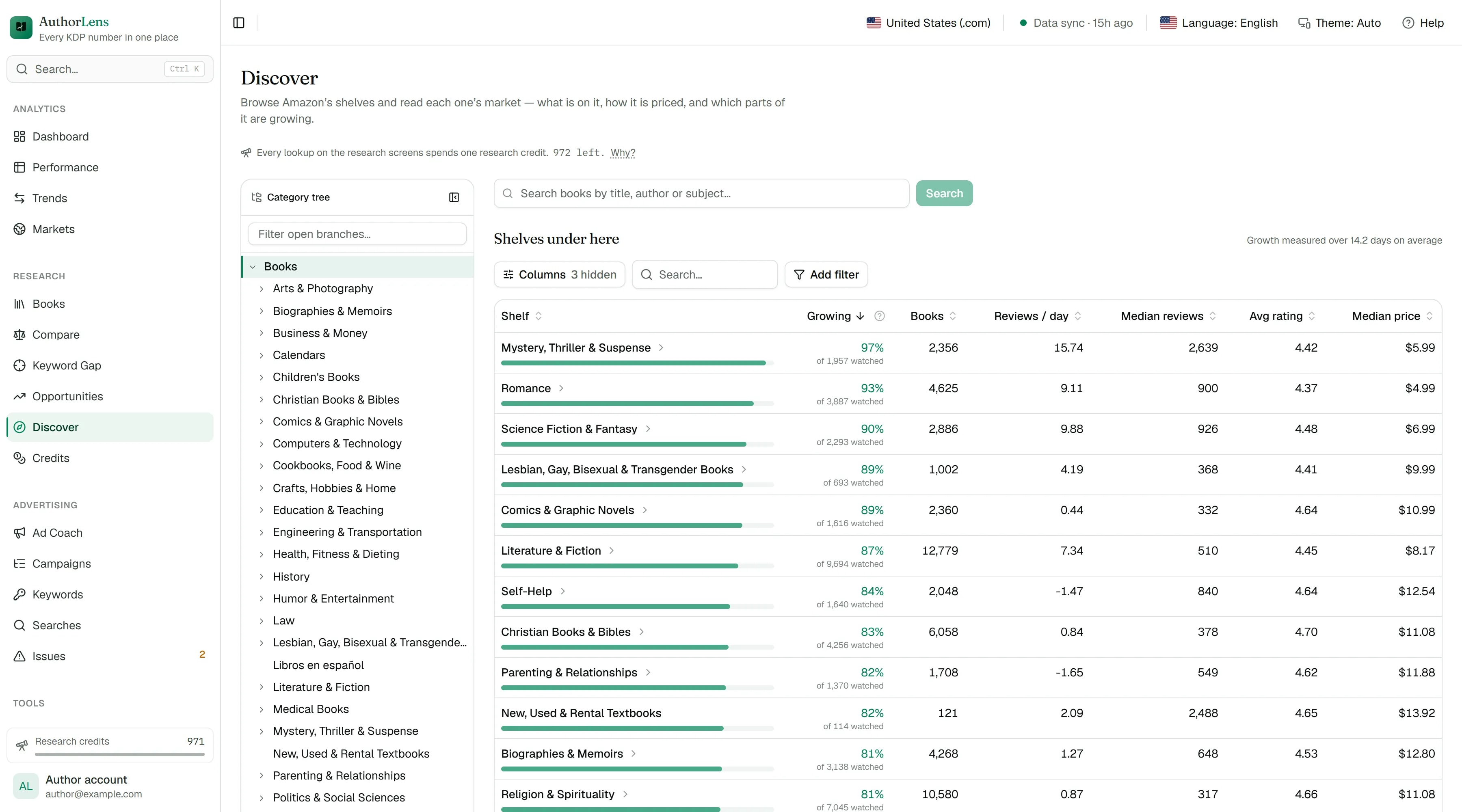
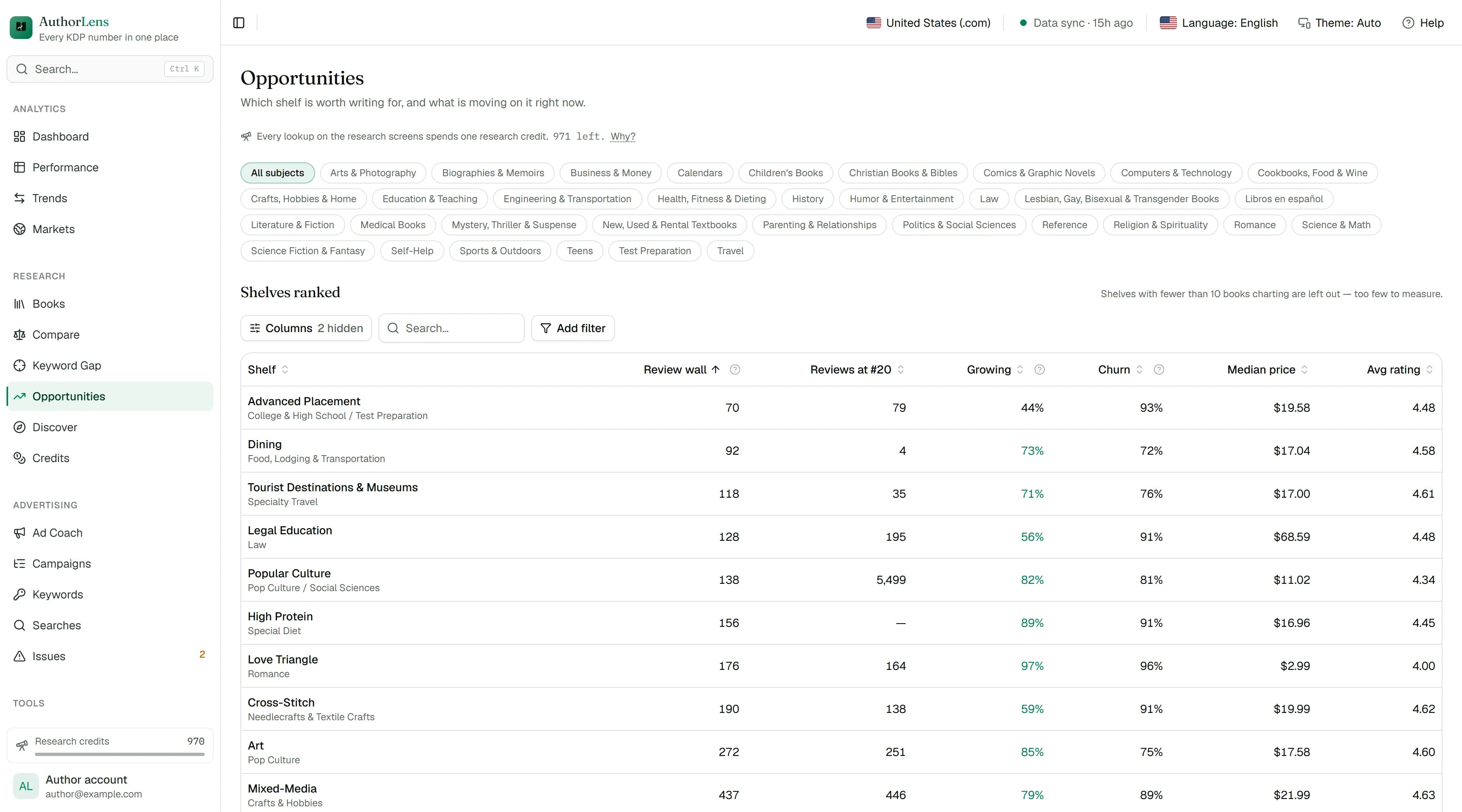
Amazon’s whole category tree: which niches are growing, what a book there costs and how many reviews it takes to compete. This is the research you used to buy a separate tool for.
No opening every campaign one at a time. All search terms sit in a single list: the ones spending without a single order are obvious, and they can go straight into negatives.
What is happening to the books sitting next to yours in the results — their price, rating, review count and how their rank moves.
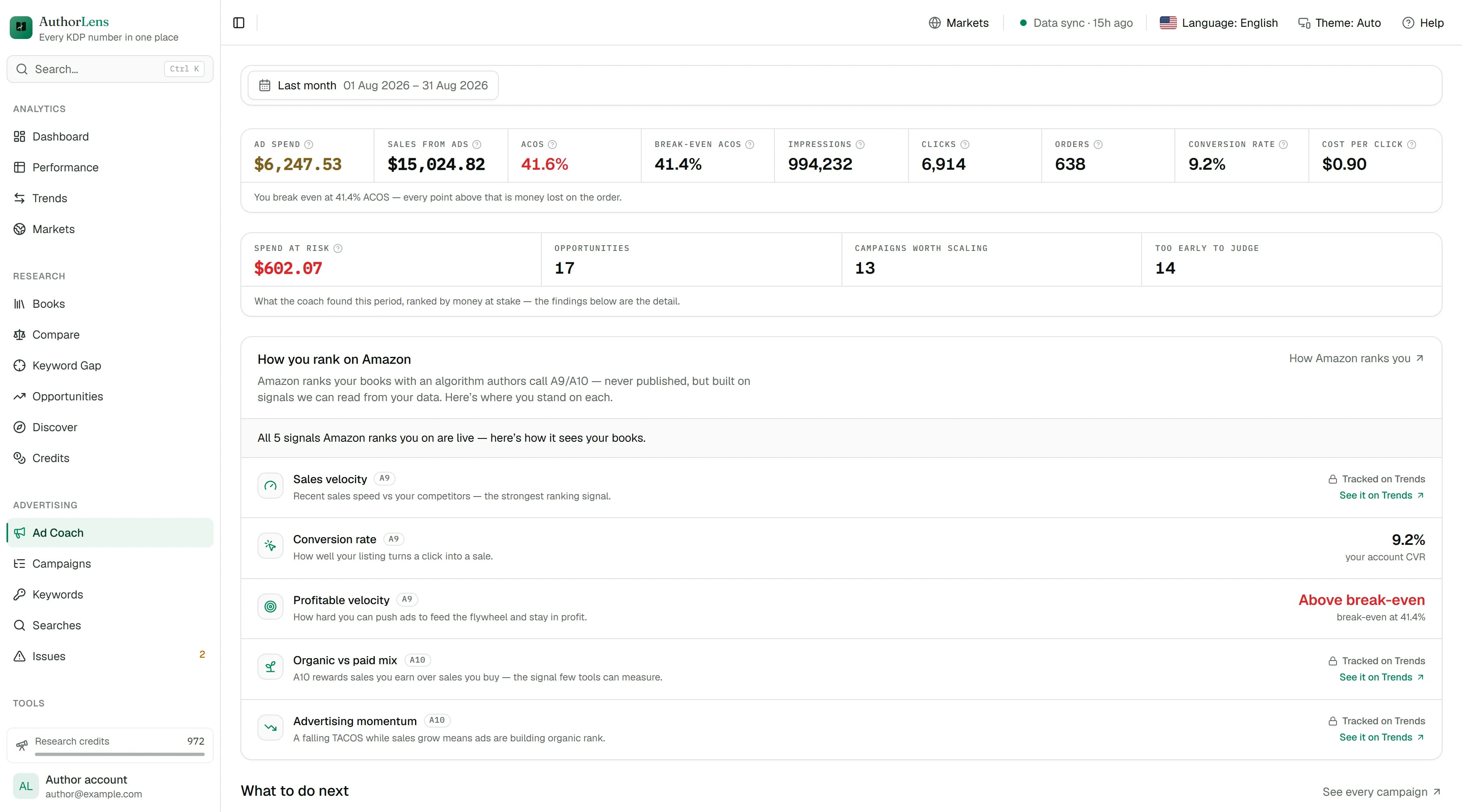
Ask in plain words — which book was the most profitable in August, or where you are burning budget. It reads your own tables and answers from your own figures, never from a general opinion about publishing. Every number it quotes was computed before the model saw it.
Getting started
An email and a password — that is the whole form. We send one link to confirm the address.
The advertising console connects through Amazon’s official API; royalties come through the AuthorLens extension for Chrome or Firefox, because KDP has no earnings API of its own. Neither ever changes anything in your Amazon account, and together they take a few minutes.
After that you simply open the dashboard. Nothing to reconcile by hand.
What not knowing costs
That is the spend in the example at the top of this page. If even a tenth of it goes to search terms that never convert, that is over $600 a month. The subscription costs $39.99.
Seeing any of this takes numbers per book, not guesswork. One decision made in time pays for a year of the subscription.
Straight answers
AuthorLens only reads your reports. It never places a bid, changes a budget or touches a price. Amazon’s permission screen mentions campaign access because that is the only advertising permission Amazon offers — we use it to read, and for nothing else.
Nothing is smoothed or invented. If a figure is missing, Amazon has not sent it yet — reports arrive with a delay, and the screen says so instead of drawing a zero.
From inside your account, in Settings. No calls, no retention offers, no minimum term.
Pricing
Before you start
Connect Amazon and look at the real numbers.